Friday, July 3, 2020

The King Tea Kettle: Should We Honor or Destroy It?


In 1905, the Lizzie Loman Stove Works of Sheffield was for sale. Two brothers who worked as salesmen for King Hardware of Atlanta saw the potential in the business and persuaded the company to purchase the foundry. By 1917, William H. and Charles Martin had secured what was then known as King Stove and Range for themselves. They subsequently made a wise business move to add a line of cast iron cookware to the foundry's line.
Many of the factory's employees were African-American, and wages were poor even by the standards of the day. For whatever reason, William Martin's wife was concerned enough about her husband's employees that she packed Christmas baskets each year and delivered them to workers' families. Thus began a tradition that Martin Industries continued until its demise 80 years later.
However, it's the apocryphal story of the King Stove tea kettle that has always been the most intriguing. One by one, King Stove added pieces to its popular line of cast iron cookware. Looks may not have been of major concern to those who designed the holloware, but utility was.
The story has often been retold that the designer of the King tea kettle (similar to one pictured above) took particular care with the piece since he knew it would be a staple in most homes. Looking at the not quite finished mold, he announced to those assisting him that it was almost ready - it lacked only the spout opening, and that could be neither too large nor too small.
An older black employee then stepped forward and used his thumb to perforate the spout, and the designer declared it perfect. Was this particualar finishing touch what made the King Stove tea kettle so popular? 
With many today calling for the destruction of what has been made with underpaid or even free African-American labor, should we melt down all the remaining collectible King kettles? Or should we cherish them even more because they illustrate the value of one exploited laborer who never received any recognition for his contribution?
King Stove discontinued its line of cast iron cookware in 1953. In 1974, the company combined with its sister foundry Martin Stove in Florence to form Martin Industries. While never wildly successful, the Florence based firm catered to a mid-priced niche for decades until competion finally proved too much. Martin Industries closed its doors for the last time in 2003, leaving almost seven million dollars in debt. The location of the company's once modern headquarters on East Tennessee Street in Florence is now a vacant lot encircled by a graffiti covered retaining wall.

Bette F. Terry holds a degree in history from UAH.

Thursday, March 12, 2020

The Near Death Experience of Hester Allison Fudge


Hester Allison was born in 1852. Her father served in the Civil War, as did her future husband William Henry Fudge. From The Sound of His Voice by Edward Fudge:


When the Civil War erupted, William Henry (Fudge) enlisted in the 35th Alabama Infantry, Confederate Company “G”. He was captured by General Sherman, held as a prisoner of war, and released on Independence Day of 1861. Still passionate for the Confederate cause, he soon re-enlisted and fought at the Battle of Shiloh. 

By 1922, Hettie had been a widow for 13 years. The Spanish Influenza epidemic had hit Athens hard in 1918, and now four years later the 70 year-old Hester Fudge had fallen victim to another strain of the disease. 
Hettie's physician had told her family that the situation was bleak. Her vital signs were growing weaker. The family prepared for the expected end.
It wasn't until 1975, that Dr. Raymond Moody shook the world of science with his stories of near death experiences, but in 1952, Hester Allison Fudge related hers to the Athens, Alabama, newspaper.
The centenarian told of traveling through a valley, of walking toward a light that proved to be a man holding a lantern. The man, whom Hettie said she didn't recognize, stood on the far side of a river that she presumed to be Jordan. He told Hettie that her time had not come, that she had to return.
Return Hettie did, living over 30 more years. She passed away just short of her 102nd birthday and is buried in the Athens, Alabama, city cemetery.

B.F. Terry holds a degree in history from UAH and is the great-great niece of Henry Fudge.

Tuesday, October 29, 2019

Ole Red McLaughlin of WOWL Broadcasting Fame


The man known as “Ole Red” to thousands of mid-20th Century Shoals radio listeners was born Nelve Pancie McLaughlin on August 26, 1910, in Lauderdale County. His home was near Green Hill in a community called Cow Pen, a fact he often made mention of in his radio broadcasts.

As a young man, Red married Helen Redding, and they were parents to one child, Gene Howell McLaughlin who died a short time after his birth in 1931. Helen died in 1981, eleven years before her husband. 

While Red’s primary occupation was that of an ironworker at Reynold’s Metals Company outside Muscle Shoals, he also toiled as a disc jockey at WOWL Radio in Florence, raised horses, and even ran for sheriff in 1960, but it was his second calling as a Country & Western entertainer which brought him regional fame. For a short while, his radio show also branched out into weekend programming at WOWL Television each Saturday. 

Red’s favorite song was North to Alaska, and few shows went by that he didn’t perform the Johnny Horton classic accompanied by his band the Ranch Hands. The country entertainer also made it a point to feature new talent in his line up and was one of the first to introduce local legends Melba and Peanut Montgomery to the public. 

Richard Taylor is a Florence native who now resides in Linden, Tennessee. The owner of Singing Wood Guitar Company, Richard was already a virtuoso as a young music student. He shared this memory about Ole Red and the Ranch Hands:

“My guitar teacher, Lyndon Smith, was the guitar player in that band and he used to let some of his students go on the show and do a song or two. My family lived next door to the TV station and I remember walking across our yard with my guitar and singing "That's All Right Mama" with Lyndon Smith standing beside me encouraging me all the way. He was a GREAT teacher; and Ole Red and his band treated me really nice. This was in 1958 or 1959. My first ever time to play on TV.”

In the late 1960s, networks began to leech more time from independent radio and television stations, causing such programs as McLaughlin’s to be phased out. Ole Red McLaughlin passed away on October 16, 1992, and is buried next to his wife Helen in the Emmaline Stutts Cemetery near El Reposo Nursing Home in Lauderdale County. His memory lives on in those he entertained for decades. 

Note: The photos in the above collage are WOWL publicity stills and were hand colored by Keith Williams for the Lauderdale County, Alabama, History page on Facebook.

Bette F. Terry holds a degree in History from UAH

Wednesday, October 9, 2019

African American Heroes of the Tennessee Valley


On Sept. 22, 1862, President Abraham Lincoln issued a preliminary Emancipation Proclamation warning that in all states still in rebellion on January 1, 1863, he would declare their slaves free. The historic event was an important point in the Civil War and the beginning of the United States' transformation into the land of the free.
Many African American heroes, who made their mark on the world, called the Tennessee Valley home. The African American people of the Valley have been major contributors to the history, heritage, and culture of the land and have shown uncommon courage in most remarkable ways. Today, museums stand in their honor to showcase objects and materials of importance in their lives and to present them to the public for the purpose of education and enjoyment.
August 26, 2019, marked the 50th anniversary of the walk down a hill to attend public schools by the Clinton Twelve. The museum tells the compelling story of twelve high school students, who in 1956, braved threats of violence to attend Clinton High School, making it the first desegregated public high school in the South and the first integrated school in the South to graduate a student of color after the historic Brown vs. Board of Education landmark decision. The Green McAdoo Cultural Center and Museum follows the chronologically detailed story of the 1956 desegregation of Clinton High School in life-size pictures with dramatic narrative.
The Jesse Owens Memorial Park, located in Oakville, Alabama, honors the life and accomplishments of the Olympic sprinter and gold medalist. Born in 1913 in Oakville, Alabama, Jesse Owens captured four gold medals at the 1936 Olympics in Berlin where Adolf Hitler famously refused to congratulate him. The first American to win four gold medals in track and field, he is honored in his hometown with a statue, museum, home replica, a 1936 torch replica, and a long jump pit to tests one’s ability in reaching his gold medal distance of 26 feet 5 5/16 inches. In 1955, he was named Ambassador of Sports by President Eisenhower and toured the world promoting the virtues of amateur programs. He served as Eisenhower’s personal representative to the 1956 Olympic games in Melbourne, Australia. In 1970, he was inducted into the Alabama Sports Hall of Fame, presented the Medal of Freedom by President Gerald Ford in 1976 and received the Living Legend Award in 1979 from President Jimmy Carter.
In honor of the author of the 1976 book Roots: The Saga of an American Family, Alex Haley Heritage Square sits on the slopes of Morningside Park in Knoxville, Tenn., with views of the city, downtown business district and the Smoky Mountains. Within the Alex Haley Heritage Square, there are play structures, a paved loop and a peaceful green space with benches. The focal point of the community-built playground is the stunning 13-foot high bronze statue of the author and Pulitzer Prize winner.
Throughout history, music seemed to be the one channel in bridging the disparities of race. Noted musicians calling the Tennessee Valley home are W. C. Handy, Bessie Smith, and Howard “Louie Bluie” Armstrong.
Father of the Blues W.C. Handy was born in a small log cabin in Florence on November 16, 1873. He presented to the world the sounds of rhythm-and-blues, jazz, and soul with famous tunes such as “St. Louis Blues,” Memphis Blues,” and “Beale Street Blues”. The museum houses a collection of memorabilia, musical instruments, personal papers, and original sheet music. Handy's famous trumpet and his personal piano are just a few of the items on display.
Crowned as Empress of the Blues, Bessie Smith earned the honor as the greatest classic blues singer of the 1920s. The museum’s original goal was to present the many contributions African Americans made to the development of Chattanooga. In 1996, a newly renovated facility became the new home of the Chattanooga African American Museum and the Bessie Smith Hall and included a world-class performance hall within the complex. The Bessie Smith Performance Hall has become well known in the Chattanooga community as an educational institution and spectacular venue to host performances, banquets, meetings and various community events.
The Louie Bluie Festival is named in honor of Howard "Louie Bluie" Armstrong, a LaFollette native and internationally acclaimed string band musician who grew up in LaFollette in the 1920s and became one of the nation's finest string band musicians, as well as artist, storyteller, and writer. Growing up, “Louie Bluie” was influenced by the genres of music that early settlers brought to Appalachia. He learned to play a fiddle at an early age and would go on to become one of the nation's finest black string band musicians, receiving a NEA’s National Heritage Fellowship. The free festival is set for September 28, 2019, in Cove Lake State Park in Caryville, Tennessee.

Sunday, March 11, 2018

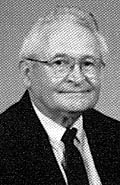
Biography of William Lindsey McDonald of Florence, Alabama


mcdonald


William Lindsey (Bill) McDonald (June 7, 1927 - June 20, 2009) was a native of Florence, Alabama. A lover of history since he was a young boy, Bill McDonald was known for his in-depth knowledge of the area's history. A tireless researcher, he served as the Florence City Historian beginning in 1989 and authored or co-authored fifteen books and innumerable articles in magazines, newspapers and periodicals.
After serving in World War II, Dr. McDonald received a degree in business administration from Florence State Teachers College (now UNA) in 1952. He was a member of the first graduation class of the new ROTC program and after graduation from college he left to serve as a Second Lieutenant in the Korean War. A retired Army Reserve Colonel with thirty-eight years of service, Dr. McDonald's reserve duty included assignments on the staffs of the Provost Marshal General and the Assistant Chief of Staff for Personnel at the Pentagon. In addition to his Florence State degree, Dr. McDonald graduated from the Army's Command and General Staff College (1974), the Industrial College of the Armed Forces (1975); and pursued seminary studies in the United Methodist Church. He was a member of the National Honor Society of Phi Kappa Phi.
After returning to the Shoals, Dr. McDonald was employed with the Tennessee Valley National Fertilizer Development Center and retired in 1988 as Chief of the Budget Staff. A retired minister, he served several rural churches in Lauderdale and Colbert Counties, and wrote prolifically on the history of Methodism in North Alabama. From 1968 to 1989 he served as Chair of the Florence Historical Board and in 1989 was appointed City Historian, a position he held until his death in 2009. He also served as president of the Tennessee Valley Historical Society and the North Alabama Historical Association, as well as Conference Historian for the North Alabama United Methodist Church. Dr. McDonald assisted in the organization of five museums in the North Alabama area and researched and wrote the texts for more than seventy-five historical markers in Florence, Lauderdale County and Courtland. The recipient of numerous awards and commendations, Dr. McDonald was recognized by the UNA Alumni Association with a Community Service Award in October 2000 and conferred with an honorary Doctor of Humane Letters degree by UNA in May 2006.
Bill McDonald collected historical information about the Shoals area for more than half a century. His research involved personal interviews, painstaking analysis of original documents and materials, and an uncanny ability to piece together information and ideas in unique and interesting ways. His personal collection included notes, hundreds of photographs, research documents, and a number of limited and one-of-a kind resources. In addition to his books, the public most often had access to Dr. McDonald's wealth of knowledge through his writings on Shoals history in the Florence Times-Daily.
Bill McDonald was married to Dorothy Carter McDonald, an artist and retired teacher in the Florence City School System. They made their home in Florence and had two daughters: Dr. Nancy Carter McDonald and Suzannah Lee McDonald.

The above is the official University of North Alabama biography of Mr. McDonald.

Monday, June 27, 2016

The Iconic Three-C Grill


When students left the campus of Florence State College at the end of the spring semester in 1958, they left the Triangle Grill standing on the corner of Wood and Morrison Avenues. When they returned in the fall, they were met by the new Three-C Grill. The Triangle had been so named due to the acute angle at which Wood and Morrison met, and over the years it had won popularity with the college students who were its largest customer base; yet the Three-C is what most Florentines think of when asked to recall the corner before it was purchased by the university.

When Jerry, Jim, and Charlie Carroll acquired the old Triangle Grill, it seemed only natural to rename it the Three-C. Less than a year later the brothers established the Three-C Barbershop directly behind the grill on Morrison Avenue.

It was during this era that the Baptist organization on campus purchased a Victorian home on Wood Avenue directly across from the grill. The new Baptist Student Union was completed c.1962 and produced a marked increase in foot traffic at the iconic Wood/Morrison corner. Business flourished.


Even with its enormous popularity, the Three-C wasn’t always met with smooth sailing. In July 1960, an employee’s brakes failed as she attempted to park on the Morrison Avenue side of the grill, resulting in severe damage to the establishment. Yet, the Carroll brothers persevered, and by the early 1960s branched out, purchasing the former Jiffy Burger location on another triangular corner at Wood and Royal Avenues. They dubbed their newest eatery the Three-C Grill Jr. It boasted a drive-thru window that was perhaps, not counting bootlegger establishments, the only one in the Shoals at the time.

Business continued to be good for all the Carroll brothers’ businesses, and in 1966, they completely renovated the interior of the Three-C Grill adjacent to the college campus. It wasn’t unusual to see classes from Appleby or Gilbert Elementary Schools dining at the grill as a special treat. When plastic first came to the area, the Three-C became one of Florence’s first businesses to accept the innovative Bank Americard (the forerunner to Visa) in 1968.

After the arrival of Hardee’s in Seven Points and similar fast food restaurants in nearby areas, the Three-C Grill Jr. closed in the late 1960s, but the original continued to thrive. Many who remember the small eatery have compared it to Trowbridge’s in popularity and the loyalty of its customers. It’s entirely possible the Three-C would still be serving university students today if the school hadn’t coveted the choice property adjacent to the campus.

In May 1975, the University of North Alabama offered to purchase both the Three-C Grill and Barbershop from the Carroll brothers who accepted the offer. The UNA purchase was ostensibly to create more parking, but the land where the iconic Three-C once sat is now home to signage and landscaping. All that’s left of the Three-C is memories and the faint aroma of once famous hamburgers that many claim still permeates the small corner.

Bette F. Terry holds a BA is history from UAH.

Monday, November 30, 2015

If You’re From the Shoals, You Probably Use Glad Wrap?

This Thanksgiving one of the dinners I attended was a friends/neighbors affair. When a neighbor (originally from Arizona!) asked for Saran Wrap, I had to explain that Glad Wrap usage is more common here. Or is it? And why?

“Buy local” isn’t that new a phrase. My mother practiced that by using Glad Wrap. Not only was it better than Saran Wrap, it was a Union Carbide product. Unfortunately the Union Carbide plant left Muscle Shoals in the late 1970s, but my family’s Glad Wrap usage continued.

Since my neighbor had brought up the subject, I was curious to know if Union Carbide still produced Glad products. It seems that the company sold the Glad line to First Products (Energizer Batteries) in 1985. First Products later sold Glad to Clorox which still retains 80% of the plastic wrap giant. In 2002, Procter & Gamble acquired 20% of the Glad Product Company.

Will I still use Glad Wrap? As my mother told me, it’s better than Saran Wrap, so that’s a big “Yes!”


Bette F. Terry is a local historian.