Wednesday, October 9, 2019

African American Heroes of the Tennessee Valley


On Sept. 22, 1862, President Abraham Lincoln issued a preliminary Emancipation Proclamation warning that in all states still in rebellion on January 1, 1863, he would declare their slaves free. The historic event was an important point in the Civil War and the beginning of the United States' transformation into the land of the free.
Many African American heroes, who made their mark on the world, called the Tennessee Valley home. The African American people of the Valley have been major contributors to the history, heritage, and culture of the land and have shown uncommon courage in most remarkable ways. Today, museums stand in their honor to showcase objects and materials of importance in their lives and to present them to the public for the purpose of education and enjoyment.
August 26, 2019, marked the 50th anniversary of the walk down a hill to attend public schools by the Clinton Twelve. The museum tells the compelling story of twelve high school students, who in 1956, braved threats of violence to attend Clinton High School, making it the first desegregated public high school in the South and the first integrated school in the South to graduate a student of color after the historic Brown vs. Board of Education landmark decision. The Green McAdoo Cultural Center and Museum follows the chronologically detailed story of the 1956 desegregation of Clinton High School in life-size pictures with dramatic narrative.
The Jesse Owens Memorial Park, located in Oakville, Alabama, honors the life and accomplishments of the Olympic sprinter and gold medalist. Born in 1913 in Oakville, Alabama, Jesse Owens captured four gold medals at the 1936 Olympics in Berlin where Adolf Hitler famously refused to congratulate him. The first American to win four gold medals in track and field, he is honored in his hometown with a statue, museum, home replica, a 1936 torch replica, and a long jump pit to tests one’s ability in reaching his gold medal distance of 26 feet 5 5/16 inches. In 1955, he was named Ambassador of Sports by President Eisenhower and toured the world promoting the virtues of amateur programs. He served as Eisenhower’s personal representative to the 1956 Olympic games in Melbourne, Australia. In 1970, he was inducted into the Alabama Sports Hall of Fame, presented the Medal of Freedom by President Gerald Ford in 1976 and received the Living Legend Award in 1979 from President Jimmy Carter.
In honor of the author of the 1976 book Roots: The Saga of an American Family, Alex Haley Heritage Square sits on the slopes of Morningside Park in Knoxville, Tenn., with views of the city, downtown business district and the Smoky Mountains. Within the Alex Haley Heritage Square, there are play structures, a paved loop and a peaceful green space with benches. The focal point of the community-built playground is the stunning 13-foot high bronze statue of the author and Pulitzer Prize winner.
Throughout history, music seemed to be the one channel in bridging the disparities of race. Noted musicians calling the Tennessee Valley home are W. C. Handy, Bessie Smith, and Howard “Louie Bluie” Armstrong.
Father of the Blues W.C. Handy was born in a small log cabin in Florence on November 16, 1873. He presented to the world the sounds of rhythm-and-blues, jazz, and soul with famous tunes such as “St. Louis Blues,” Memphis Blues,” and “Beale Street Blues”. The museum houses a collection of memorabilia, musical instruments, personal papers, and original sheet music. Handy's famous trumpet and his personal piano are just a few of the items on display.
Crowned as Empress of the Blues, Bessie Smith earned the honor as the greatest classic blues singer of the 1920s. The museum’s original goal was to present the many contributions African Americans made to the development of Chattanooga. In 1996, a newly renovated facility became the new home of the Chattanooga African American Museum and the Bessie Smith Hall and included a world-class performance hall within the complex. The Bessie Smith Performance Hall has become well known in the Chattanooga community as an educational institution and spectacular venue to host performances, banquets, meetings and various community events.
The Louie Bluie Festival is named in honor of Howard "Louie Bluie" Armstrong, a LaFollette native and internationally acclaimed string band musician who grew up in LaFollette in the 1920s and became one of the nation's finest string band musicians, as well as artist, storyteller, and writer. Growing up, “Louie Bluie” was influenced by the genres of music that early settlers brought to Appalachia. He learned to play a fiddle at an early age and would go on to become one of the nation's finest black string band musicians, receiving a NEA’s National Heritage Fellowship. The free festival is set for September 28, 2019, in Cove Lake State Park in Caryville, Tennessee.

Sunday, March 11, 2018

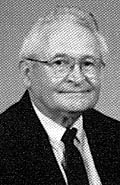
Biography of William Lindsey McDonald of Florence, Alabama


mcdonald


William Lindsey (Bill) McDonald (June 7, 1927 - June 20, 2009) was a native of Florence, Alabama. A lover of history since he was a young boy, Bill McDonald was known for his in-depth knowledge of the area's history. A tireless researcher, he served as the Florence City Historian beginning in 1989 and authored or co-authored fifteen books and innumerable articles in magazines, newspapers and periodicals.
After serving in World War II, Dr. McDonald received a degree in business administration from Florence State Teachers College (now UNA) in 1952. He was a member of the first graduation class of the new ROTC program and after graduation from college he left to serve as a Second Lieutenant in the Korean War. A retired Army Reserve Colonel with thirty-eight years of service, Dr. McDonald's reserve duty included assignments on the staffs of the Provost Marshal General and the Assistant Chief of Staff for Personnel at the Pentagon. In addition to his Florence State degree, Dr. McDonald graduated from the Army's Command and General Staff College (1974), the Industrial College of the Armed Forces (1975); and pursued seminary studies in the United Methodist Church. He was a member of the National Honor Society of Phi Kappa Phi.
After returning to the Shoals, Dr. McDonald was employed with the Tennessee Valley National Fertilizer Development Center and retired in 1988 as Chief of the Budget Staff. A retired minister, he served several rural churches in Lauderdale and Colbert Counties, and wrote prolifically on the history of Methodism in North Alabama. From 1968 to 1989 he served as Chair of the Florence Historical Board and in 1989 was appointed City Historian, a position he held until his death in 2009. He also served as president of the Tennessee Valley Historical Society and the North Alabama Historical Association, as well as Conference Historian for the North Alabama United Methodist Church. Dr. McDonald assisted in the organization of five museums in the North Alabama area and researched and wrote the texts for more than seventy-five historical markers in Florence, Lauderdale County and Courtland. The recipient of numerous awards and commendations, Dr. McDonald was recognized by the UNA Alumni Association with a Community Service Award in October 2000 and conferred with an honorary Doctor of Humane Letters degree by UNA in May 2006.
Bill McDonald collected historical information about the Shoals area for more than half a century. His research involved personal interviews, painstaking analysis of original documents and materials, and an uncanny ability to piece together information and ideas in unique and interesting ways. His personal collection included notes, hundreds of photographs, research documents, and a number of limited and one-of-a kind resources. In addition to his books, the public most often had access to Dr. McDonald's wealth of knowledge through his writings on Shoals history in the Florence Times-Daily.
Bill McDonald was married to Dorothy Carter McDonald, an artist and retired teacher in the Florence City School System. They made their home in Florence and had two daughters: Dr. Nancy Carter McDonald and Suzannah Lee McDonald.

The above is the official University of North Alabama biography of Mr. McDonald.

Monday, June 27, 2016

The Iconic Three-C Grill


When students left the campus of Florence State College at the end of the spring semester in 1958, they left the Triangle Grill standing on the corner of Wood and Morrison Avenues. When they returned in the fall, they were met by the new Three-C Grill. The Triangle had been so named due to the acute angle at which Wood and Morrison met, and over the years it had won popularity with the college students who were its largest customer base; yet the Three-C is what most Florentines think of when asked to recall the corner before it was purchased by the university.

When Jerry, Jim, and Charlie Carroll acquired the old Triangle Grill, it seemed only natural to rename it the Three-C. Less than a year later the brothers established the Three-C Barbershop directly behind the grill on Morrison Avenue.

It was during this era that the Baptist organization on campus purchased a Victorian home on Wood Avenue directly across from the grill. The new Baptist Student Union was completed c.1962 and produced a marked increase in foot traffic at the iconic Wood/Morrison corner. Business flourished.


Even with its enormous popularity, the Three-C wasn’t always met with smooth sailing. In July 1960, an employee’s brakes failed as she attempted to park on the Morrison Avenue side of the grill, resulting in severe damage to the establishment. Yet, the Carroll brothers persevered, and by the early 1960s branched out, purchasing the former Jiffy Burger location on another triangular corner at Wood and Royal Avenues. They dubbed their newest eatery the Three-C Grill Jr. It boasted a drive-thru window that was perhaps, not counting bootlegger establishments, the only one in the Shoals at the time.

Business continued to be good for all the Carroll brothers’ businesses, and in 1966, they completely renovated the interior of the Three-C Grill adjacent to the college campus. It wasn’t unusual to see classes from Appleby or Gilbert Elementary Schools dining at the grill as a special treat. When plastic first came to the area, the Three-C became one of Florence’s first businesses to accept the innovative Bank Americard (the forerunner to Visa) in 1968.

After the arrival of Hardee’s in Seven Points and similar fast food restaurants in nearby areas, the Three-C Grill Jr. closed in the late 1960s, but the original continued to thrive. Many who remember the small eatery have compared it to Trowbridge’s in popularity and the loyalty of its customers. It’s entirely possible the Three-C would still be serving university students today if the school hadn’t coveted the choice property adjacent to the campus.

In May 1975, the University of North Alabama offered to purchase both the Three-C Grill and Barbershop from the Carroll brothers who accepted the offer. The UNA purchase was ostensibly to create more parking, but the land where the iconic Three-C once sat is now home to signage and landscaping. All that’s left of the Three-C is memories and the faint aroma of once famous hamburgers that many claim still permeates the small corner.

Bette F. Terry holds a BA is history from UAH.

Monday, November 30, 2015

If You’re From the Shoals, You Probably Use Glad Wrap?

This Thanksgiving one of the dinners I attended was a friends/neighbors affair. When a neighbor (originally from Arizona!) asked for Saran Wrap, I had to explain that Glad Wrap usage is more common here. Or is it? And why?

“Buy local” isn’t that new a phrase. My mother practiced that by using Glad Wrap. Not only was it better than Saran Wrap, it was a Union Carbide product. Unfortunately the Union Carbide plant left Muscle Shoals in the late 1970s, but my family’s Glad Wrap usage continued.

Since my neighbor had brought up the subject, I was curious to know if Union Carbide still produced Glad products. It seems that the company sold the Glad line to First Products (Energizer Batteries) in 1985. First Products later sold Glad to Clorox which still retains 80% of the plastic wrap giant. In 2002, Procter & Gamble acquired 20% of the Glad Product Company.

Will I still use Glad Wrap? As my mother told me, it’s better than Saran Wrap, so that’s a big “Yes!”


Bette F. Terry is a local historian. 


Monday, May 4, 2015

Jesse Walker Stutts & His “Eas-It” Elixir


If you walked down Court Street in Florence exactly 100 years ago, you would encounter the pharmacy belonging to Jesse Walker Stutts. The small business was located where a sandwich shop now sits on the northwest corner of the Tennessee Street intersection.


J.W. Stutts Drug Store, Circa 1916

Born on December 12, 1875, Jesse passed away on December 1, 1960. He's buried in the Florence City Cemetery on Tennessee Street in a plat that includes his wife Virginia Lull Johnson Stutts, his son Jesse Jr., and daughter Margaret E. Stutts.

The early 20th Century was an era when most drugs were compounded. Often physicians opened their own apothecary shops; however, whether these druggists had a doctorate or not, they were often addressed as "Doctor." Some documents refer to Jesse as Dr. Stutts, but records show that Stutts received the Ph.C. degree from Vanderbilt University in 1902, making him a Pharmaceutical Chemist.

Many also confuse Jesse Walker with his brother, Dr. Henry Lee Stutts, a prominent Green Hill physician. Both were children of John Ritter Stutts and his first wife Margaret Jones Stutts.


Over a 35 year span, Stutts marketed several medicines, including Ivago for poison ivy, Scratch-No-More for pruritus, and Germ Death, an antiseptic. Yet it was his pain medicine Eas-It that put his pharmacy on the local and regional map.

The Eas-it Chemical Company was established in December 1913. State records show that initial shareholders were J. F. Brown, R. W. Stribling, and M. S. Hansborough. Stutts proudly marketed his pain relief liquid as "non-narcotic;" however, it was formulated in an elixir base indicating the popular product contained a large percentage of alcohol.

Stutts conducted what could be called an innovative marketing campaign, utilizing both print ads and signage:


When current owner of the former apothecary building Delana Darby Blake began remodeling, she found one of Stutts' ubiquitous signs:


By 1940, Stutts' place in Florence history was cemented. He and son Jesse Jr. and daughter Margaret incorporated the Stutts Laboratories. For whatever reason, perhaps the uncertainty produced by World War II, the company was dissolved after a relatively short time. One of this company's most popular products was Nervine, recommended for both humans and horses.

By 1960, the year of Jesse Walker Stutts' death, his once famous drug store had become home to Kreisman's Men's Wear:


What would Stutts think of the building's current incarnation as a sandwich shop? The entrepreneur in the noted pharmacist would undoubtedly want to buy stock and initiate a new advertising campaign.


Bette F. Terry holds a B.A. in history from the University of Alabama in Huntsville.

Saturday, November 8, 2014

Patch the Pony Born in Florence in 1963


It was 1963 when Margaret Liles of Florence heard FBI Agent Glenn Hearn address a PTA meeting. Hearn commented on the frequency of child abductions, and the idea was further brought home to Liles three days later when an attempted child abduction was reported at Gilbert Elementary School in North Florence. Liles wanted to make a difference, but how?

The mother of four soon came up with the character of Patch, a pony designed to convey safety messages to primary school children. As Patch said, “Nay, Nay, from strangers stay away.” Mrs. Liles then began a campaign to introduce Patch and his safety slogan into local and then state schools. Governor George Wallace was so impressed with Liles’ character of Patch that in 1966 he flew her to Washington to speak to the President’s Commission on Crime. 

Embarking from Florence in a designer ensemble donated by Abroms Department Store, Margaret Liles hoped to make her Patch character as well-known as Smokey the Bear; however, while support was there, the money never materialized. Despite the lack of government funding, Patch became well known in school systems in all 50 states where teachers presented his story in film strips and in books given to each student. 

After much thought, Liles decided to sell the rights to her creation to someone more financially able to produce the materials used in Patch’s program. Then with the advent of better technology, Patch gradually began to fade from school systems, and many relegated Patch to a bygone era. Some years ago the rights to Patch were purchased by Russ Fender, a man who had grown up hearing the story of the pony who wore an eye patch.

Fender stated he wanted to bring Patch up to date and make him known to a new generation of children, but found the cost of his project made it necessary to proceed in increments. A glance at the website for Patch shows that it’s reverted to GoDaddy.

What of Patch now? Until Fender gets the resurrection of Patch the Pony fully underway, those who fondly remember Patch and his creator Margaret Liles who passed away in 1990 may wish to to join the pony’s fans on Facebook: Patch the Pony.


Bette F. Terry holds a BA in history from UAH

Saturday, September 20, 2014

Florence's Dutch Treat Turns Into Trick?


The Doughnut: Historical or Just Dangerous?


If you say “Dusty Joe’s” to a person of a certain age, you’re sure to hear tales of barbecue and teenage hijinks long before the now defunct strip was even thought of. Many will still say the demise of Florence’s premiere fast food establishment was a sad turning point in their lives.

Yet in 1971, Dusty Joe’s closed its doors for the last time, and the Huddle Restaurant arrived. Its stay in Florence was short-lived, and in 1973, the Dutch Treat opened at the busy corner of Tennessee and Poplar Streets. It was to remain until 1980 when it also closed, leaving the building vacant for a year until it became home to the Trailways Bus Station. While no treats are now served at the building that is currently home to Knight & Humphries Real Estate (Kevin J. Knight and Steve N. Humphries), it seems there’s still a trick remaining.

The Dutch Treat was opened by William and Jane Woldenberg and Linda Mae Bryan, and while the menu may be lost forever in local memory, it’s certain the most popular items were doughnuts. After 41 years, the store’s neon adorned sculpture of a doughnut still stands on the southeast corner of Tennessee and Poplar, yet unclaimed by any and all and a menace to the public.

Since the building that housed Dutch Treat had stood on the busy downtown Florence corner for years, it’s safe to assume the neon doughnut had its own electric meter added when the desert shop installed the sign--a meter that was pulled when the new owners took possession of the building.

It’s also safe to assume that when Trailways remodeled the building to house more public restrooms and locker storage, the switch to the doughnut sign was covered in dry wall and forgotten. To make the problem of the now leaning doughnut sign even more perplexing, the pole on which the sign is mounted appears to be secured, either firmly or tenuously, on the state right-of-way. Florence didn’t pass a sign law until the late 1970s.

A few years ago, a local blogger proclaimed the sign one of the Shoals area’s eyesores. At that time, the city said Knight & Humphries (which also operates under the name “Real Property Management”) owned the rusty doughnut, while the real estate firm adamantly averred the city was responsible for the relic and any damage it might in future cause.

Is it dangerous? Is it a local landmark that should be preserved instead of relegated to a scrap yard or stored ala the famous neon Coca-Cola signs? In case any think it should be declared a landmark, much of the neon that outlined the pastry is now missing, the doughnut itself is rusty, and two iron rods (presumably to hold additional advertising) are secured underneath giving the sign the look of a primitive weather vane.

Due to the extensive loss of life two counties to the south of Lauderdale, perhaps many didn’t regard the true extent of damage to Florence trees and signage after the April 2011 tornadoes, but nevertheless many seemingly firmly planted objects were uprooted and swept yards from their original location.

If the City of Florence does own the sign by default after all these years, perhaps it could offer it to any collector with proper credentials and insurance who would remove the eyesore and sell the pole for scrap. Or perhaps one day the Shoals area will awake to read the headline: Unlucky Driver Beheaded by Flying Doughnut.

Editor’s Note: Mr. Gary Williamson, the sign officer for the Florence Building Department, is aware of the problem of the delinquent doughnut and should make a decision soon on its ultimate fate.


Bette Favor Terry holds a BA in history from UAH